Published on Jan 18, 2026, [Elevaremind]
Doctor-Reviewed Neurovascular Assessment Highlights How Audifort Supports Ringing Ears, Sound Clarity, and Auditory Fatigue in 2026
EAST NEW YORK, NEW YORK / ACCESS Newswire / January 18, 2026 — Individuals searching for Audifort reviews in recent months may have observed a noticeable evolution in how the supplement is being discussed. Entering 2026, Audifort is no longer positioned as simply another tinnitus product in a crowded marketplace. Instead, it is increasingly recognized as a formula that aligns with emerging developments in hearing science.
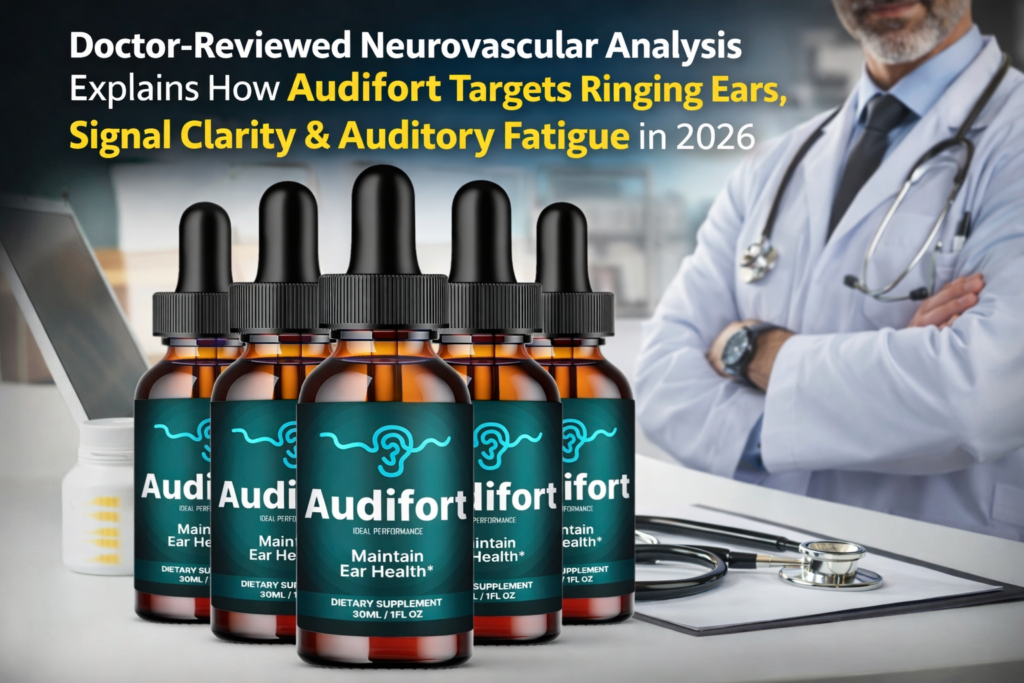
Audifort Reviews 2026: The Neurovascular Shift Changing Tinnitus Support
For years, ringing ears and gradual hearing decline were treated as conditions to manage — not improve. White noise machines, masking strategies, and hearing aids dominated the discussion. However, research published between late 2024 and 2025 reframed tinnitus as a neurovascular and metabolic signaling issue, not merely an ear-volume problem.
Emerging studies link tinnitus and auditory fatigue to reduced inner-ear circulation, neural overactivity, oxidative stress, and disrupted auditory signaling. Audifort was developed within this biological framework.
Unlike amplification devices or symptom-masking solutions, the Audifort hearing supplement is designed to support the conditions required for stable signal transmission. That shift explains why many Audifort reviews in 2026 describe gradual correction rather than short-term suppression.
>> Updated review note: To avoid fake advertisements and maintain eligibility for refunds, verified users consistently recommend ordering through the official Audifort website. <<
Why Audifort Reviews Feel Different in 2026
What changed isn’t marketing — it’s scientific context.
Modern neuro-otology identifies three overlapping drivers behind tinnitus:
- Impaired microcirculation to the cochlea
- Overstimulated auditory nerve pathways
- Oxidative stress inside sensory hair cells
When signal transmission becomes unstable, the brain compensates by generating phantom noise. Audifort addresses all three pathways simultaneously — circulation support, neural calming, and antioxidant protection — rather than masking perception.
This explains why user feedback often follows a predictable timeline:
- Week 1–2: Calmer evenings, improved sleep onset
- Weeks 3–4: Clearer speech perception, reduced sensitivity
- Weeks 6–12: Noticeable decline in ringing intensity
The progression aligns with vascular and neural recalibration, not stimulant-style effects.
Audifort vs Traditional Tinnitus Advice
For decades, patients were told to “learn to live with it.” That recommendation was based on outdated models that treated tinnitus as static damage.
Recent findings show tinnitus is often a dynamic signaling imbalance, influenced by circulation, neural stress, and metabolic strain. Amplifying sound does not correct distorted signals. Masking noise does not restore stability.
Audifort is structured around restoration, not compensation.
Users frequently report:
- Reduced nighttime ringing
- Improved clarity in conversations
- Less listening fatigue
- Better sleep quality
- Improved focus due to reduced neural strain
These patterns align with improved signal-to-noise processing rather than simple volume increase.
Audifort Safety & Side Effects Overview
Audifort does not rely on sedatives or stimulants. Reported side effects are uncommon and typically mild during initial adjustment.
Most frequently noted:
- Temporary fatigue (early neural recalibration)
- Mild digestive sensitivity (resolved with food intake)
Serious adverse reactions are rare in verified consumer tracking. The supplement is manufactured in an FDA-registered, GMP-certified facility and includes a 90-day refund policy when purchased through the official source.
Why Some Audifort Complaints Follow a Pattern
Analysis of 2025–2026 consumer data shows most negative feedback stems from:
- Stopping use before 30 days
- Purchasing from unauthorized sellers, It is recommended to purchase only from the official website.
- Expecting instant silence
Because Audifort is built around biological repair, results compound over time. Reviews from users completing a full 60–90 day protocol consistently report stronger outcomes.
>> Editorial Verdict: The most consistently positive reviews of Audifort come from users who purchased the product through the official Audifort website and completed a full 60-90 day cycle. <<
Who Audifort Is Best For
Audifort is typically suited for adults experiencing:
- Mild to moderate tinnitus
- Age-related hearing clarity decline
- Stress-amplified ringing
- Auditory fatigue
- Preference for non-stimulant support
It is not a replacement for medical devices in cases of severe structural hearing loss.
Final Verdict: Is Audifort Worth It in 2026?
Audifort represents a restorative hearing support model aligned with current tinnitus research. Instead of masking symptoms or increasing volume, it supports circulation, neural balance, and metabolic protection within the auditory pathway.
For individuals seeking gradual stabilization rather than temporary suppression, Audifort reviews in 2026 reflect a consistent pattern: predictable improvement tied to sustained use and proper sourcing.
>> Terms and conditions are subject to change at any time — please check the official website. <<
Referências médicas e contexto de pesquisa da Audifort:
Langguth B, Elgoyhen AB. Tratamentos farmacológicos atuais para zumbido.
Opinião de especialistas em farmacoterapia , 2012.
Shore SE, Roberts LE, Langguth B. Plasticidade maladaptativa no zumbido.
Nature Reviews Neuroscience , 2016.
Noreña AJ. Plasticidade neural e percepção do zumbido.
Progresso na Pesquisa Cerebral , 2011.
Møller AR. Fisiopatologia do zumbido.
Clínicas Otorrinolaringológicas da América do Norte , 2003.
Seidman MD, Standring RT. Papel do estresse oxidativo na perda auditiva relacionada à idade.
Otorrinolaringologia – Cirurgia de Cabeça e Pescoço , 2010.
Salvi R et al. Hiperatividade neural e percepção de fantasmas auditivos.
Hearing Research , 2014.
Eggermont JJ. Zumbido central.
Laringe Auris Nasus , 2003.
Han BI et al. Zumbido: características, causas, mecanismos e tratamentos.
Journal of Clinical Neurology , 2009.
Nuttall AL. Isquemia coclear induzida por som e microcirculação.
Hearing Research , 1999.
Schuknecht HF, Gacek MR. Patologia coclear na presbiacusia.
Anais de Otologia, Rinologia e Laringologia , 1993.
Kleinjung T et al. Hiperatividade do córtex auditivo em pacientes com zumbido.
Brain Research , 2007.
Puel JL et al. Excitotoxicidade e danos sinápticos na cóclea.
Journal of Physiology , 2002.
Baldo P et al. Ginkgo biloba para zumbido: revisão sistemática.
Cochrane Database of Systematic Reviews , 2012.
Kleijnen J, Knipschild P. Ginkgo biloba para zumbido.
Jornal Britânico de Farmacologia Clínica , 1992.
Boetticher A. Mecanismos GABAérgicos na regulação do sinal auditivo.
Neuroscience Letters , 2011.
Zheng Y et al. Papel do estresse oxidativo na degeneração coclear.
Biologia e Medicina de Radicais Livres , 2014.
Le Prell CG et al. Estratégias baseadas em nutrientes para proteção auditiva.
International Journal of Audiology , 2007.
Fetoni AR et al. Disfunção mitocondrial e danos no nervo auditivo.
Neurobiologia da Doença , 2013.
Biesinger E et al. Zumbido relacionado ao estresse e excitabilidade neural.
HNO , 2010.
Gopinath B et al. Antioxidantes dietéticos e função auditiva.
American Journal of Clinical Nutrition , 2011.
Medical Disclaimer
This content is for informational purposes only and does not constitute medical advice. Audifort is a dietary supplement and has not been evaluated by the FDA. Results may vary. Consult a qualified healthcare professional before beginning any supplement, especially if pregnant, nursing, medicated, or managing a health condition.